
How to Choose the Right Propeller
1. Select your engine
Find your model with a 100% fitment guarantee
2. Check your current propeller
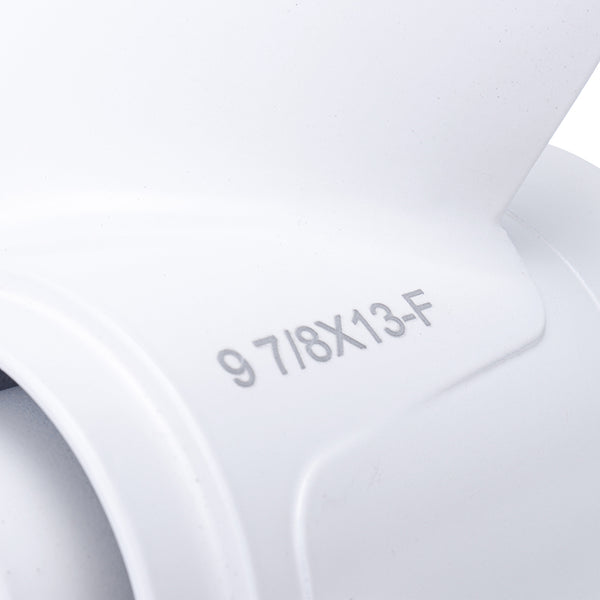
The size is engraved on the propeller
3. Order your new propeller
Choose the same size or adjust the pitch
How do I find my current propeller size?
The size is usually indicated on the outside of the propeller hub. It is usually written like this (examples):
- 11 1/4 X 13
- 11.25 X 13
The first number is the diameter (11.25) and the second number is the pitch (13).
Some brands use a different way to indicate the size or model.
- 11 1/4 X 13 – G (Yamaha)
- 48-832832A45 21P (Mercury Mercruiser)
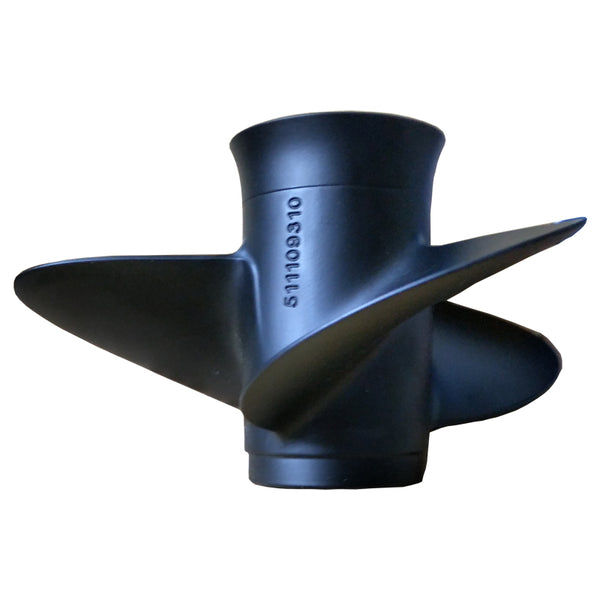
- 5111-093-10 (Solas)
- 814629 (Volvo Penta)
Yamaha adds a letter to indicate the series: which engines the propeller fits (power class, gearcase and number of splines). Mercury Mercruiser uses a number code ending with the pitch (in this case pitch 21). Solas propellers use the last 4 numbers to indicate the size (in the example above diameter 9.3 and pitch 10). Volvo Penta uses its own numbering system, see here for an overview table.
If you have lost your propeller in the water or the size has become unreadable, please contact us for advice.
What is pitch?
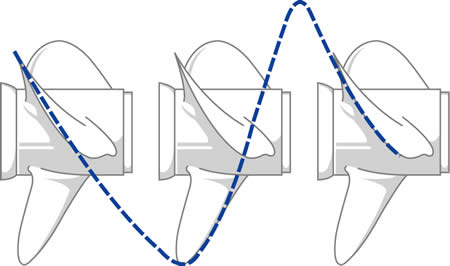
Pitch is the most important property of a propeller. It is the “curvature” of the propeller blades. The pitch (e.g. 13) represents the forward distance (number of inches) that a propeller would travel in one complete rotation.
A larger pitch means more curvature and potentially a higher top speed. A smaller pitch means less curvature and thus more acceleration.
Think of pitch as the gears of your car. Starting in first gear (small pitch) you can accelerate quickly, but your top speed is limited. Pulling away in a higher gear (larger pitch) is slower, but your top speed will be higher. However, if the gear (pitch) is too high, the engine will not be able to reach enough RPM (revolutions per minute) and will thus also not be able to come up to speed. With too low a gear (too small a pitch) the engine will rev too high, which limits your speed and may also damage your engine. Continue reading below to find out how you can get a good indication of the pitch you should choose.
Propeller calculator
Use our online calculator to quickly get an indication of the optimal pitch for your new propeller.
Choosing the right pitch
If you are currently satisfied with the performance of your engine, we recommend choosing the same pitch. However, if you wish to change the performance you can consider a different pitch. For example, if your engine currently revs too high or too low at full throttle, or if you want to use your boat for a specific purpose (e.g. waterskiing).
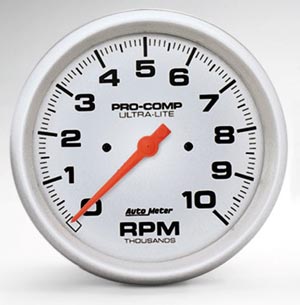
A good indicator for selecting the optimal pitch is the RPM your engine makes at “wide open throttle” (WOT). Each engine has a prescribed “optimal” RPM that it should be making at wide open throttle. This differs per engine but often it is between 4500 and 6000. You can check your manual, or check this RPM Range Chart for the most common engines.
If your RPM is currently too high, you may consider a larger pitch that will improve your top speed. If the RPM is too low, the engine is not reaching its full potential because the pitch is too large. In this case choosing a smaller pitch can result in better acceleration (because of the smaller pitch) and higher top speed (because the engine can now reach full RPM).
If you’re changing pitch on a recreational boat, remember that each inch of pitch translates to a difference of approximately 200 to 300 RPM. Lowering the pitch will increase RPM and choosing a larger pitch will reduce RPM. For example, going from a 23 pitch to a 21 pitch will increase engine RPM by about 400 to 600. For smaller horsepower engines (up to 30 hp) this difference is usually bigger: a single inch of pitch can already make that much difference.
Other considerations
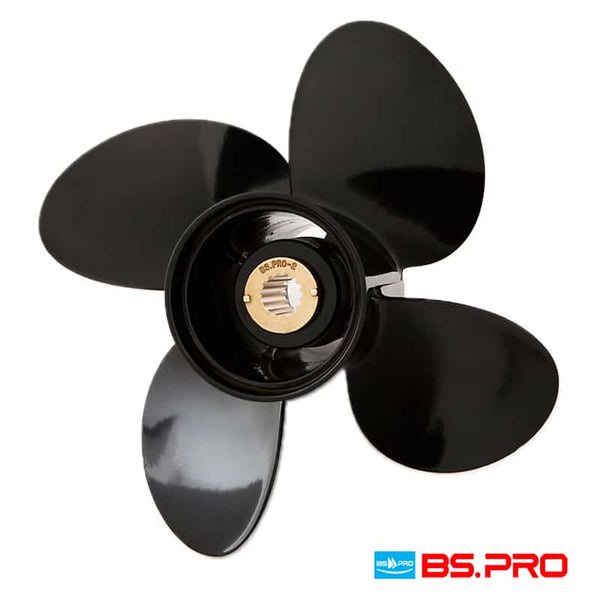
3-blade vs 4-blade
Most propellers have 3 blades. For speed this is the most efficient design. For extra thrust at low speeds you may consider a 4-blade design. This will give more acceleration but may come at the cost of some top speed. This is useful in situations such as waterskiing, wakeboarding, or when accelerating a relatively heavy boat.
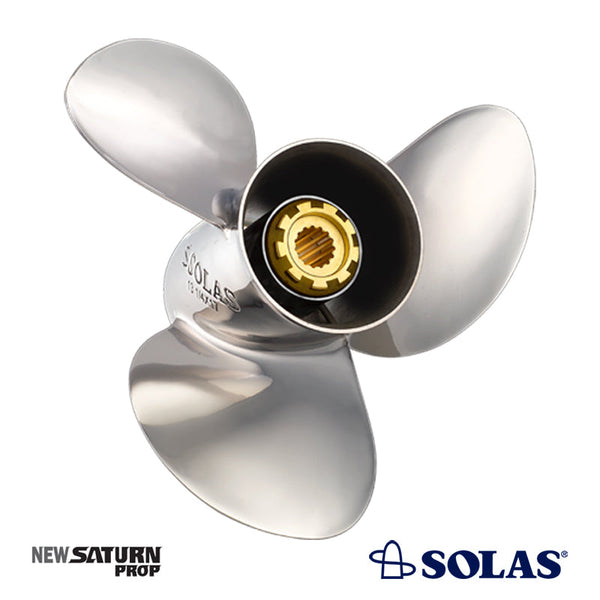
Aluminium vs Stainless Steel
Stainless steel propellers are stronger than aluminium propellers. This makes them less vulnerable to scratches from sand. Because of the stronger metal the blades are usually thinner which improves the efficiency of the propeller. However, stainless steel propellers are more expensive than aluminium propellers.
Propeller technology
Diameter
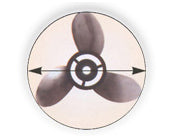
The diameter is the length of your propeller from left to right (see picture). The propeller diameter that you can choose is determined by your engine. If you select your engine on our website you will automatically find propellers that have a diameter that fits your engine. Please note that choosing a 1-inch larger diameter has approximately the same effect as a 2-inch larger pitch.
What is a hub kit?
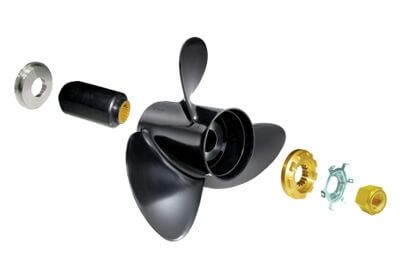
The hub system is the connection between the propeller and the propeller shaft of your gearcase. All our propellers come with a hub as standard. Most of them have a pressed-in rubber hub. Some propellers have an interchangeable hub kit (especially those for higher-horsepower engines).
What is a nut kit?
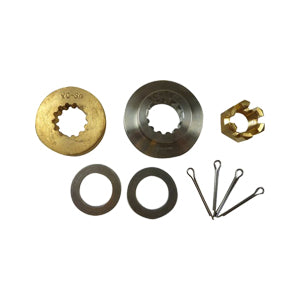
The propeller is fixed on the propeller shaft with mounting parts. A nut kit usually includes a nut, cotter pin, washer and spacer. Normally you only need to replace your propeller and can re-use these parts. If you have lost your propeller while boating, you may have lost these parts as well. The right nut kit is suggested on the product page of the propeller for your engine.
What are tooth splines?
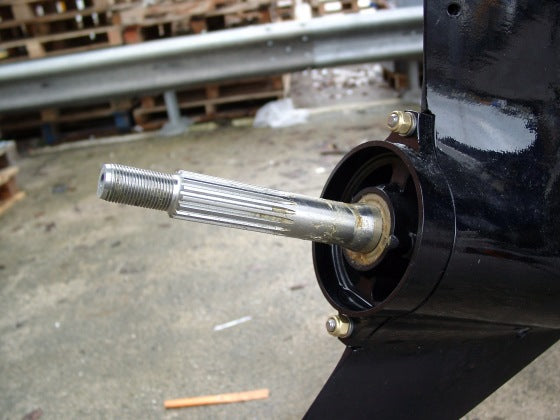
A new propeller will only fit if the number of “tooth splines” on your propeller shaft is the same as the number of tooth splines on the inside of your propeller hub. When you select your engine in our shop, the propellers with the right number of tooth splines are selected automatically. To verify if your new propeller will fit, you can check the number of tooth splines as mentioned on the product page.
- Choosing a selection results in a full page refresh.


!